
Survival of the Fittest
Wednesday, May 8th 2013
Do you remember these owlets from the blog post on 29th April?
.jpg)
Because Tawny Owls lay their eggs over a period of several days, the hatching is also staggered. This means that there is always a difference in the size of the chicks in the nest, the larger and more active individuals invariably getting more food from the parents than their smaller, weaker siblings. As a result, it is rare for all the chicks that hatch from a clutch to survive unless there is an abundance of food. Often the youngest chicks starve, or are sometimes even eaten by their siblings. This may seem cruel but this method of rearing of young ensures that, whatever the food availability, some offspring will always survive and produce further offspring. If all the young were fed equally there would be a chance that all might starve in years of poor food supply. So when the box was re-visited yesterday, it was no surprise that there was only one large healthy chick.
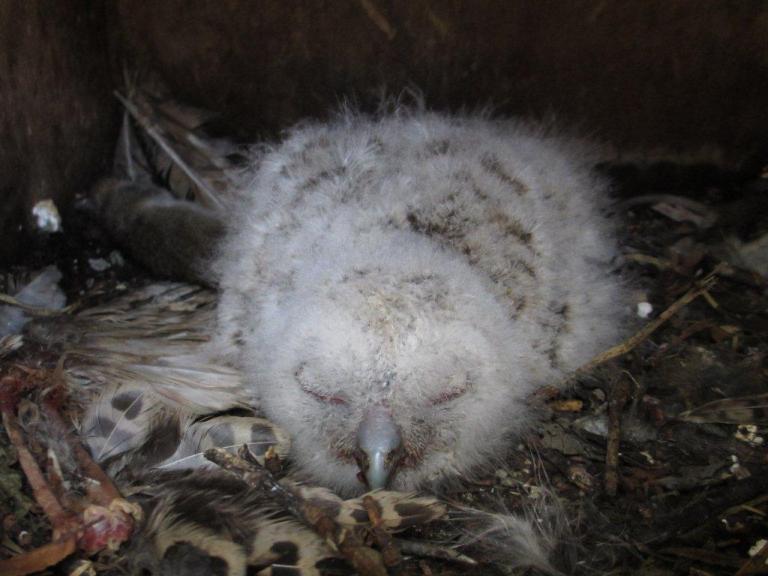
This was ringed and then carefully returned to the nest box.

The moth trap was set last night and produced 41 moths of 7 different species (Early Grey, Hebrew Character, Common Quaker, Powdered Quaker, Twin-spotted Quaker, Clouded Drab and Small Quaker.
(0) Comments:
There are no comments for this blog post yet. Why not start the discussion? - use the form below:
Help Support Foxglove
Friends of Foxglove
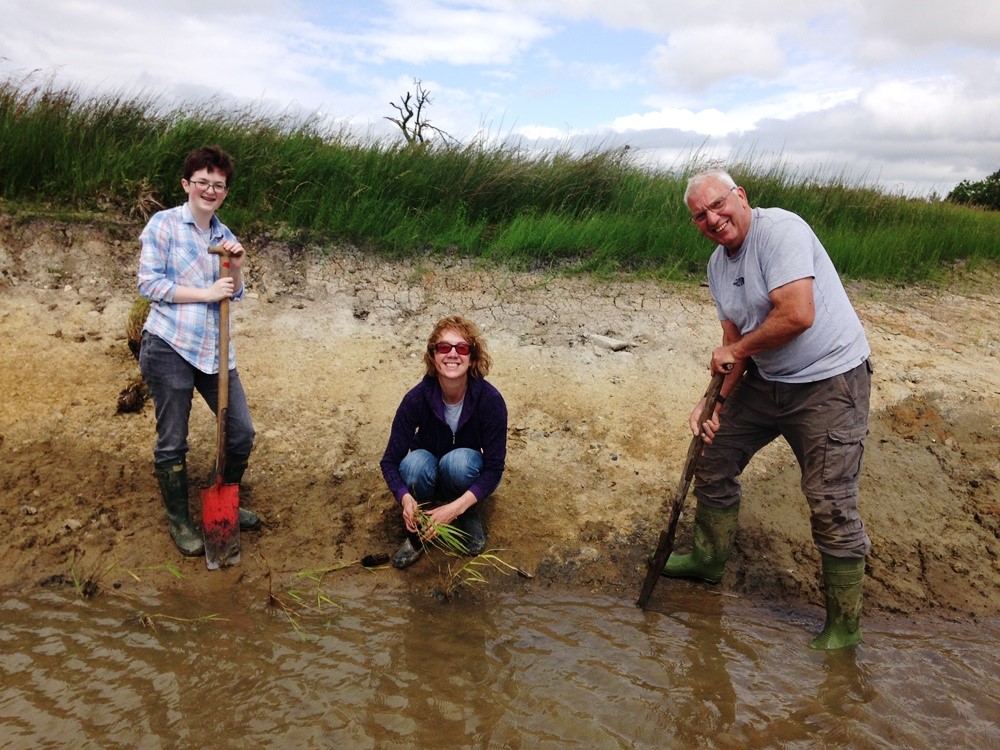
The Friends of Foxglove Covert is for those individuals, families and organisations who would like to support the reserve through an annual membership subscription. Friends receive a regular newsletter and invitations to attend our various activities and social events.
More DetailsUpcoming Events
CLOSURE: Monday 22nd April 2024
Wednesday 17th April 2024 |
Due to an important event occuring on the camp, Foxglove Covert LNR will be closed for one day only on Moday 22nd April.
The reserve will resume usual opening hours on Tuesday 23rd April.
Access to the Reserve: OPEN with limited access
Monday 18th March 2024 |
The reserve is now open, although again with limited access.
Visitors will be able to access the reserve with the use of key fobs provided at the pass office upon entrance to the camp, or will be provided entrance and exit through the access gate by an officer from the camp Guard Room. In this case visitors will need a mobile phone to call the Guard Room when they wish to exit the reserve.
Please be aware that due to these circumstances, entering and leaving the reserve might take a little longer than usual.
Undergrowth Newsletter

View All The Newsletters
Recent Blog Posts
- More Dead Hedging
- Dead Hedging
- Beautiful Bird Boxes!
- Completed Coppice
- Unconventional Scything
- Garden Birds
- Winter Fungi
- Winter highlights
- Happy 2024!
- Wonderful winter workers!
- Making A Start
- Visitor Information (Update)
- Autumn Crafts and Autumn Colours
- Weekend Waxcaps
- Meadows and Ponds
- Meet Foxglove’s New Ranger
- All Work and No Play?
- Field Centre open Sunday 15th October 12 noon - 4.00pm
- Paving the Way
- Getting further, faster - together…
- Brian’s Baler!
- Reserve closed Tuesday 26th September 2023
- The Revolution has begun!
- Learning to Scythe with Steve Tomlin
- A fine time was had by all!
- Bird Ringing
- Galls
- Late Summer into Autumn
- News from the North
- Thank you!
- A Quiet Walk
- Hanging Around
- Mipits
- Common Lizards Again!!
- Species
- Bird Ringing
- Keeping Your Eyes Open
- Weekend opening hours Saturday 12th and Sunday 13th August
- We are recruiting!
- Thank yous and Bye Bye
- When the Sun Comes Out
- Weather and Flora and Fauna
- Volunteers at Work
- More Photos from the BBQ
- Jenga
- Volunteer and Bye Bye BBQ
- Summer
- Summer Work
- More Wildlife
- Wildlife
- A Good Growing Season
- Weekend opening hours Sat 22 & Sun 23 July 2023
- Moth News
- Butterfly Roundup
- More Moths
- Butterflies and Moths
- Weekend opening Saturday 8th and Sunday 9th July 2023
- Watching
- Juvenile Birds
- Common Lizards
- The Scrapes
- Nesting birds
- Ooohs and Ahhhs at the Moth Traps
- Co-operative Plants and Animals
- Summer Maintenance
- Moth Update
- Warm Days
- The Bees Return!
- June Flowers
- Lots of Legs
- Sharing Ideas
- Questions
- Caught Chasers!
- Some Bugs and Beasties
- Snow in June?
- Chasing the Chasers and Other Insects
- A Lesson - Perhaps?
- Small Nest Box Time
- Half Term Trail
- A Winding Way Through the Reserve
- Checking the Ponds
- Around the Reserve
- Moths and…
- Wildlife
- Living Creatures
- Roe Deer
- Dippers
- Dawn Chorus and Volunteering
- CES 1
- Hive of Activity
- Job Complete!
- Trial Run
- Flowers
- Natural England
- At Last
- Spring Sun Winter Wind
- Last Photos from Gibraltar and Shy Moorhens
- Winter or Spring?
- More Flowers and More from Gibraltar
- Reptiles
Blog Archive
- Blog Posts from - 2024
- Blog Posts from - 2023
- Blog Posts from - 2022
- Blog Posts from - 2021
- Blog Posts from - 2020
- Blog Posts from - 2019
- Blog Posts from - 2018
- Blog Posts from - 2017
- Blog Posts from - 2016
- Blog Posts from - 2015
- Blog Posts from - 2014
- Blog Posts from - 2013
- Blog Posts from - 2012
- Blog Posts from - 2011
- Blog Posts from - 2010
- Blog Posts from - 2009